
What is assessed in a Uro-CT?
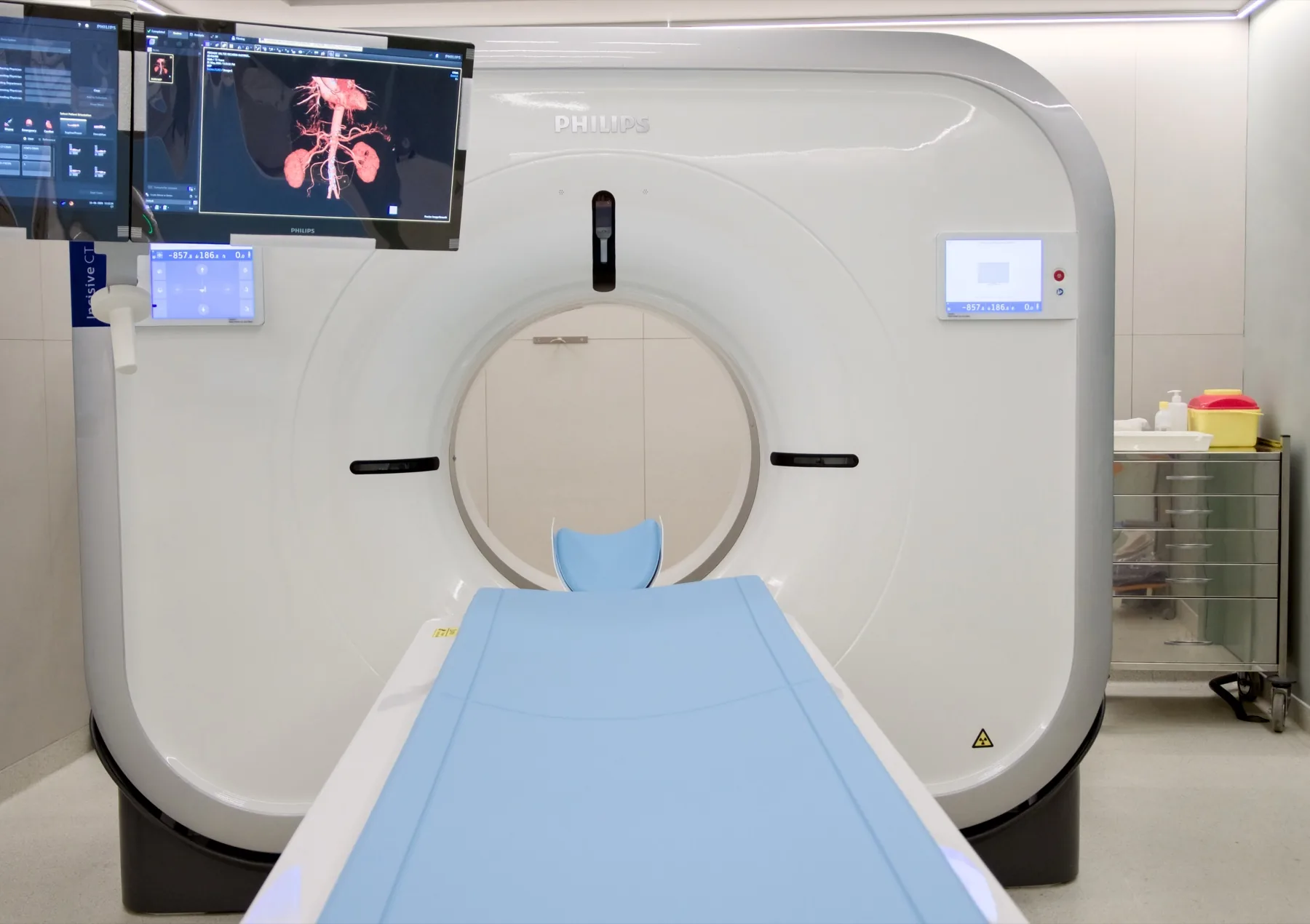
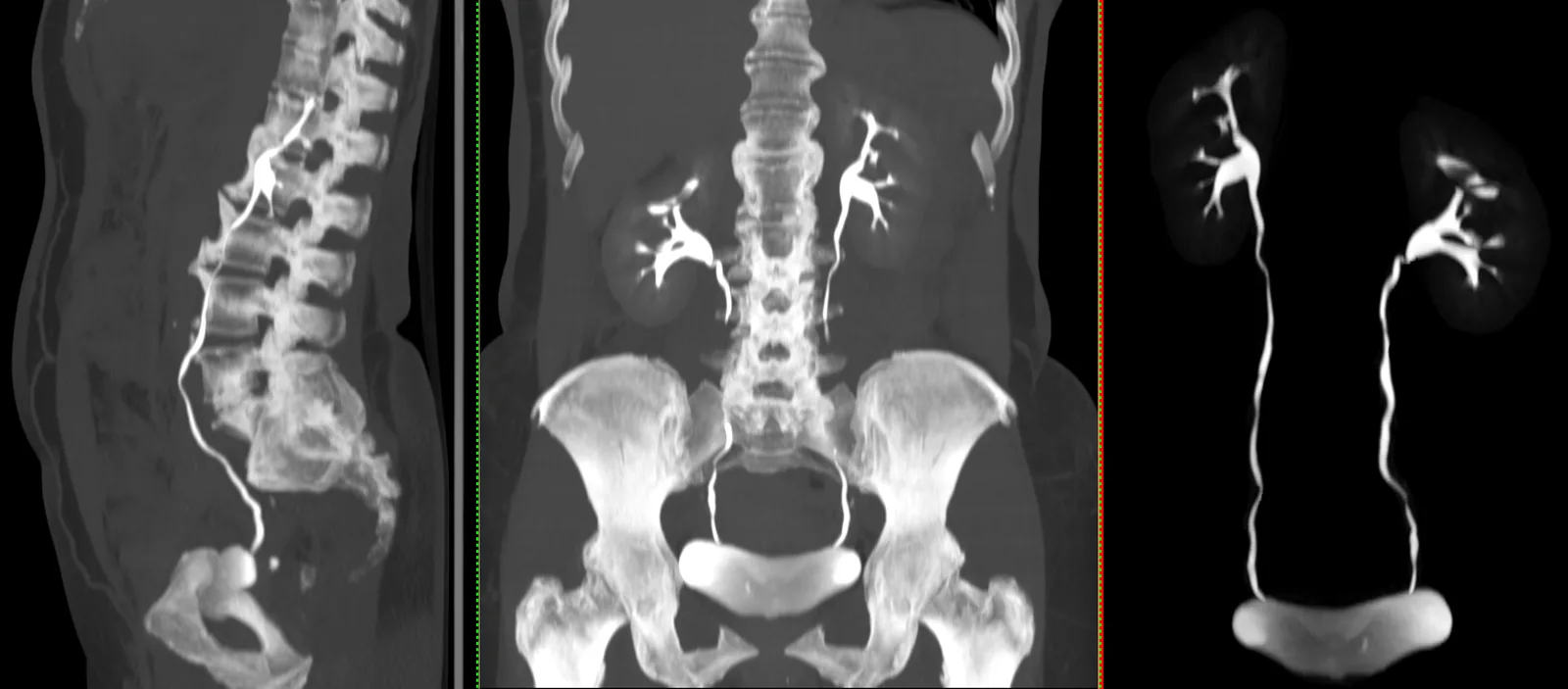
A Uro-CT allows assessment of the kidneys, the ureters (the tubes that connect the kidneys to the bladder) and the bladder. It is a very sensitive exam for the assessment of urinary stones — number, size and location — and allows the causes of haematuria and other changes of the urinary tract to be studied, according to the clinical indication.
In most cases, intravenous iodinated contrast is given, with acquisitions in different phases — including the phase in which the contrast is cleared by the kidneys, which outlines the urinary tract. A simple search for stones can be done without contrast, according to the prescription. The report is produced by a radiologist; the clinical interpretation rests with your doctor.
When it is requested
- Urinary stones — initial study, location and follow-up ("kidney stones").
- Renal colic — assessment after the acute episode, according to clinical guidance.
- Haematuria — study of blood in the urine, visible or found on tests.
- Recurrent urinary infections, according to clinical guidance.
- Study of changes of the kidneys or urinary tract found on other exams.
- Assessment before or after urological surgery, according to guidance.
What the exam is like
- 1Before
Reception
Arrive 30 minutes before your appointment, for the hydration beforehand. You do not need to fast. If you have recent blood tests with kidney function (last 3 to 6 months), it's advisable to bring them.
- 2
Hydration beforehand
While you wait, you are given water to drink at CRMA. Good hydration improves the study of the urinary tract.
- 3
Preparation
You remove only the metal objects from the abdomen and pelvis area: belts, fasteners, piercings. As a rule, you keep your own clothes on.
- 4
Positioning
Lying on your back on the table, usually with your arms above your head.
- 510–20 min
Image acquisition
The table moves through the scanner's open ring; you will be asked to hold your breath for a few seconds at each acquisition. With intravenous contrast, acquisitions are made in different phases; it is normal to feel a passing warmth and a metallic taste.
- 6
Finishing
You can leave, drive and resume your normal day. We recommend that you continue to drink water throughout the day.
Preparation
- Arrival: 30 minutes before your appointment, for hydration beforehand.
- Fasting: not required. Have a light meal before you come.
- Hydration: provided at CRMA while you wait for the exam — you don't need to bring anything.
- Kidney function: if you have recent blood tests (last 3 to 6 months) with creatinine/kidney function, it's advisable to bring them. They are not mandatory.
- Medication: keep your regular medication — including your diabetes and blood pressure medication, and metformin — unless your doctor advises otherwise.
- Iodinated contrast allergy: if you have had a reaction to iodinated contrast, let us know when booking. Each case is assessed individually by the radiologist.
- Metal objects: remove only those from the area being studied — belts, fasteners, piercings.
- Pregnancy: CT uses X-rays. If you are or think you may be pregnant, always let us know before the exam.
- Breastfeeding: always let us know. If the exam is with contrast, breastfeeding may continue as normal after the contrast is given (ACR/ESUR recommendation).
- Documents: referral, insurer/scheme card (if applicable), previous exams (ultrasound/CT/MRI) and recent blood tests, if you have them.
Results
The report is produced by a radiologist from the images. The report is available as a PDF (by email or printed) and the images on CD and on CRMA's imaging platform, to take to your doctor.