
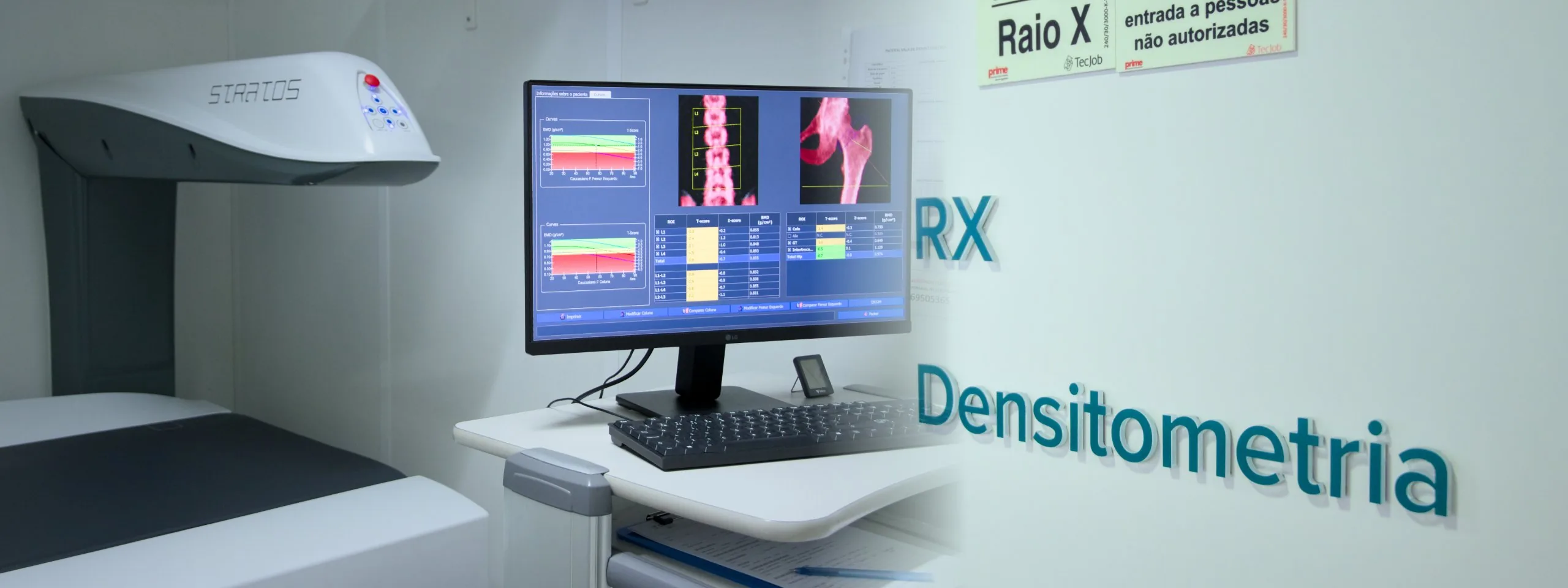
What does bone densitometry assess?
DEXA (dual-energy X-ray absorptiometry) quantifies bone mineral density, expressed in values comparable with a reference population. It is used to assess osteoporosis and osteopenia and to monitor the response to treatment.
Regions studied at CRMA — alone or in combination, according to the referral:
- Lumbar spine.
- Femoral neck.
- Forearm — for example when the spine or femur cannot be assessed.
When it is requested
- After the menopause, on the advice of your treating doctor.
- Fragility fractures — fractures from minimal trauma.
- Long-term corticosteroid medication or other therapies that affect bone.
- Conditions with an impact on bone — endocrine, rheumatological, among others.
- Follow-up of osteoporosis treatment.
What the exam is like
- 1Before
Reception
You arrive with your referral. No fasting is needed and you keep your usual medication — only calcium supplements should not be taken on the day of the exam.
- 2
Positioning
You lie on your back on the scanner table; when the lumbar spine is assessed, your legs rest on a support.
- 310–20 min
Acquisition
The arm of the machine moves slowly over the area, without touching you. You simply stay still — the exam is painless.
- 4
Finishing up
You return to your day straight away, with no restrictions.
Preparation
- Fasting: not needed; keep your usual medication, with a single exception — calcium supplements.
- Calcium supplements: do not take them on the day of the exam — they may interfere with the measurement. Normal eating is allowed.
- Clothing: comfortable, with no zips, metal buttons or belts over the area to be studied.
- Recent exams with contrast or nuclear medicine: tell the team when you book if, in the last few weeks, you have had exams with contrast (barium, iodinated, gadolinium or oral contrast), scintigraphy or PET, or taken liquid antacids containing aluminium — these may affect the result and mean the exam has to be rescheduled.
- Previous densitometry: bring the report — the comparison is only reliable against the previous exam, ideally performed on the same machine.
- Pregnancy or suspected pregnancy: always tell the team — densitometry is not performed during pregnancy. Breastfeeding may continue as normal.
Results
The report is written by a radiologist. The report is available as a PDF (by email or printed) and the images on CRMA's imaging platform, to take to your treating doctor. With written authorisation, they can be sent directly to the referring doctor.