
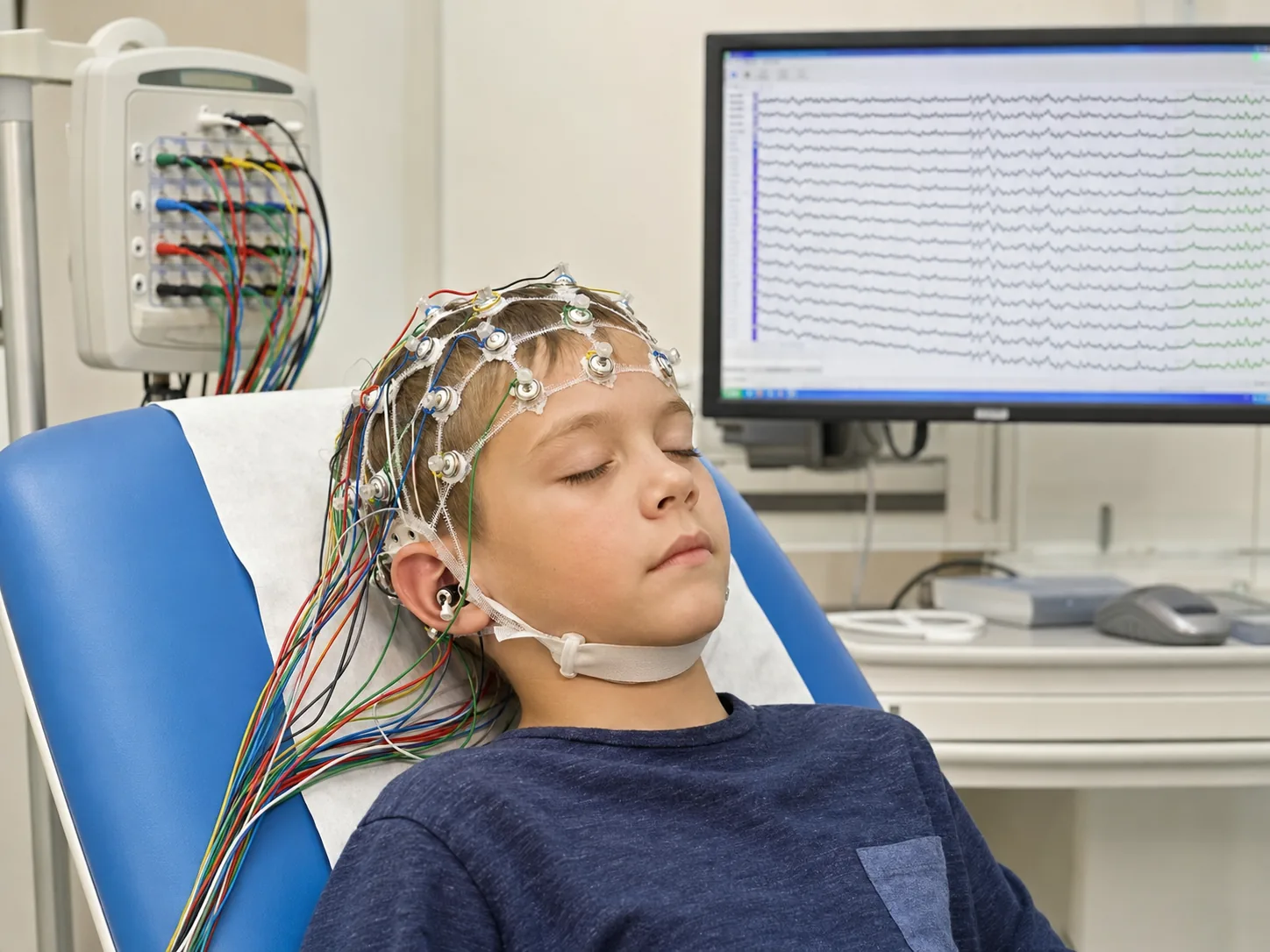
What does an EEG assess?
The EEG picks up and records the brain's electrical rhythms, helping the doctor assess changes in how the brain is working. At CRMA we perform:
- Standard EEG — a recording while awake, at rest, with activation procedures when indicated (opening and closing the eyes, deep breathing, light stimulation).
- Sleep EEG — a recording that includes a period of sleep, useful when the doctor needs to assess brain activity while falling asleep and asleep.
- Paediatric EEG — adapted to the child's age, with a parent present.
When it is requested
- Episodes of loss of consciousness or fainting being investigated.
- Suspected epilepsy and follow-up as directed by the neurologist.
- Changes in behaviour or development, in childhood, when requested by the doctor.
- Sleep disorders, as part of a specialist assessment.
What the exam is like
- 1Before
Reception
Arrive with your referral and with your hair washed and dry, with no products in it.
- 2
Placing the electrodes
The technician places the electrodes on the scalp with a conductive paste — there are no needles and no current passing into the body.
- 330–60 min
Recording
You stay seated or lying down, with your eyes closed, in a calm setting. Activation procedures may be carried out; in a sleep EEG, the recording includes a period of sleep.
- 4
Finishing up
The electrodes are removed and the paste comes off with a simple hair wash. No restrictions after the exam.
Preparation
- Hair: washed and dry, with no gel, hairspray, oils or tight braids.
- Meals: have a light meal before the exam — do not come after a long fast.
- Regular medication: continue as usual, unless your referring doctor advises otherwise.
- Sleep EEG (sleep deprivation): for adults, sleep no more than 5 hours the night before (go to bed as late as possible and get up as early as possible); for children, go to bed as late as possible and wake as early as possible.
- Children: bring a comfort object; a parent's presence is welcome.
Results
The recording is carried out by a qualified professional and the report is written by a neurologist. It is available as a PDF (by email or printed) and, with written authorisation, can be sent directly to your referring doctor.