Mon–Fri 08:00–19:00 · Sat 08:00–13:00· Faro· +351 289 892 100· geral@crmalgarve.pt PTENFR
CRMA
Functional testing · Nerves and muscles

Electro­myography (EMG)

An exam that assesses how the peripheral nerves and the muscles are working, combining a nerve conduction study with a recording of muscle activity. At CRMA it is performed by a consultant neurologist.

Duration20–40 min
EquipmentElectromyograph
ContrastNo
PreparationSpecific
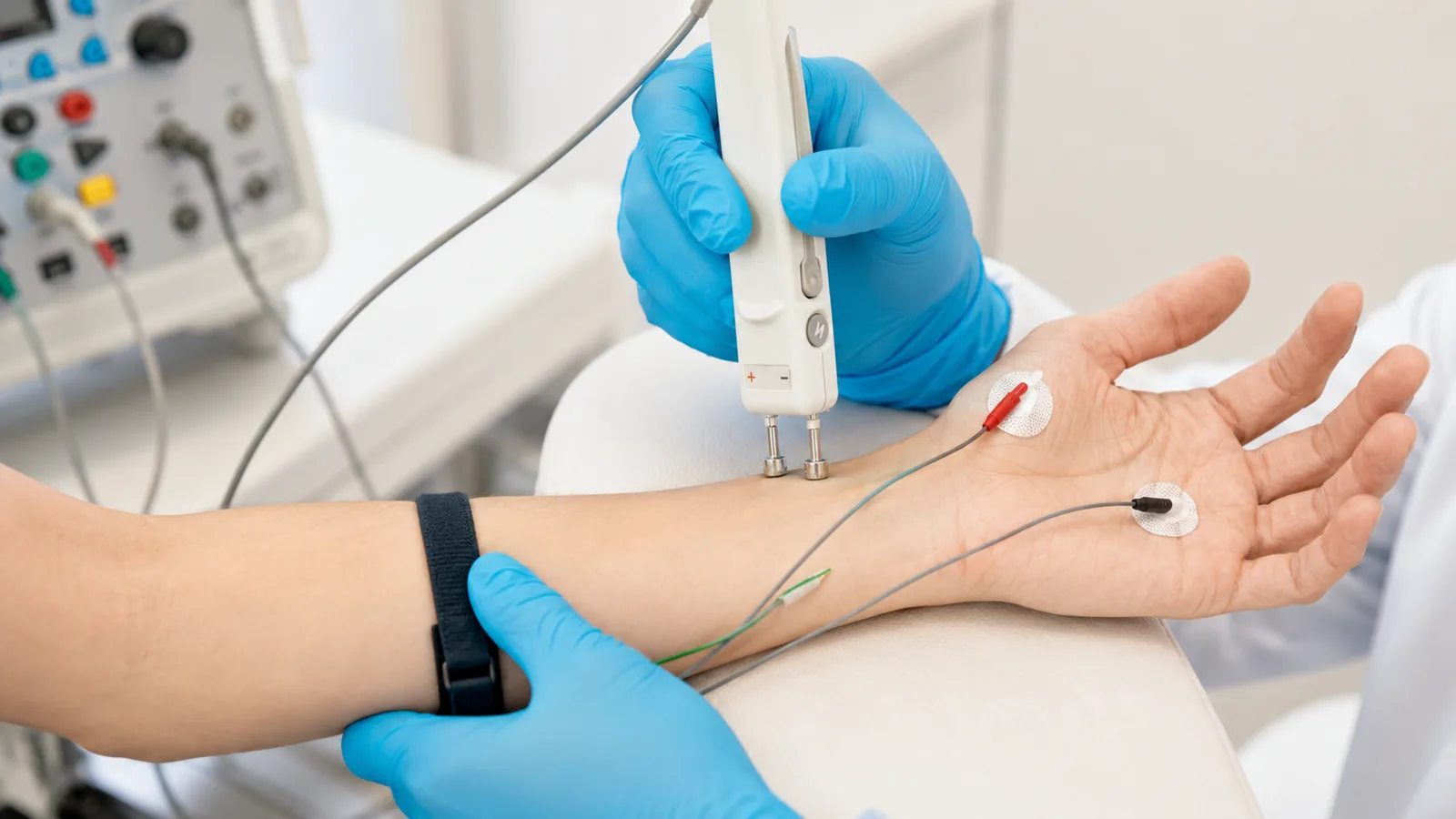
Nerve conduction study (EMG) at CRMA, in Faro: the team applies a stimulator and surface electrodes on the wrist and hand to assess the nerves of the upper limb.
In summary

Electromyography (EMG) assesses how the peripheral nerves and the muscles are working. It combines a nerve conduction study (small electrical pulses on the skin) with a recording of muscle activity through a fine needle electrode. At CRMA, in Faro, it is performed by a consultant neurologist and usually takes 20 to 40 minutes.

What does electromyography assess?

EMG studies the way the nerves conduct electrical signals and how the muscles respond. The exam usually has two parts:

  • Nerve conduction study — electrodes on the skin and small electrical pulses measure the speed and strength of the nerves' response.
  • Needle-electrode muscle assessment — a very fine electrode records the electrical activity of some muscles, at rest and during light contraction.

The doctor tailors the study to your symptoms and to the question raised by your referring doctor — not everyone has both parts.

When it is requested

  • Tingling, numbness or loss of strength in the hands or feet.
  • Carpal tunnel syndrome and other nerve compressions.
  • Sciatica or radiating neck pain — assessment of radiculopathies.
  • Peripheral neuropathies — for example in diabetes.
  • Muscle disorders, in specialist assessment.

What the exam is like

  • 1Before

    Reception

    Arrive with your referral and, if you have them, any previous exams (EMG, MRI, blood tests) — they help the neurologist guide the study.

  • 2

    Nerve conduction

    You feel small electrical taps, brief and well tolerated, along the paths of the nerves being studied.

  • 320–40 min

    Muscle assessment

    When needed, a very fine needle electrode is inserted into some muscles — this may cause mild, brief discomfort.

  • 4

    Finishing up

    You get on with your day with no restrictions. You may feel mild tenderness at the points assessed, which soon passes.

Preparation

  • Skin: clean and dry — do not apply creams or oils to your arms and legs on the day of the exam.
  • Medication: keep to your regular medication; tell us when booking if you take anticoagulants.
  • Pacemaker or other implanted devices: always tell the team.
  • Clothing: comfortable, allowing your arms and legs to be exposed.
  • Temperature: on cold days, warm your hands and feet before the exam — it improves the quality of the recording.

Results

The exam is performed and interpreted by a consultant neurologist. The report is available as a PDF (by email or printed) and, with your written authorisation, can be sent directly to your referring doctor.

Frequently asked questions

About electromyography.

Does electromyography hurt?

It may cause some discomfort — small electrical taps in the first part and the prick of a fine needle in the second — but it is generally well tolerated. The doctor sets the pace with you.

How long does it take?

Between 20 and 40 minutes, depending on the areas and the number of nerves and muscles to study.

Do I need to stop my medication beforehand?

As a rule, keep to your regular medication. If you take anticoagulants, tell us when booking — the team will give you guidance.

Can I have an EMG with a pacemaker?

Always tell the team when booking. The neurologist adapts the study to your device.

Why is the needle electrode needed?

It is the way to record the electrical activity of the muscle itself, which surface electrodes cannot capture as accurately. A very fine, sterile, single-use needle is used.

Can I drive and work after the exam?

Yes. EMG leaves no effects that limit your activities.

Ready to book?

Book your electro­myography at CRMA.

In Faro, with personal service in PT, EN and FR. We'll confirm your booking with you during working hours.